The MET Journal

Research Reports

Profiles

Issues Unraveled

Critical Analysis

Observer

Dec 12th - 1 Min Read

Gratitude’s Ripple Effect: How a simple ‘Thank You’ can change everything

Gratitude, the art of appreciating life's positives, has the power to transform our outlook and foster meaningful connections. It goes beyond mere politeness, shaping a profound connection with ourselves, others, and the world.


Defining Gratitude: 


Gratitude is a conscious acknowledgment of life's blessings, encompassing essentials like shelter, food, and relationships with friends and family. Take a moment to reflect on how fortunate you are when something good happens, whether it's small or big.


Gratitude Can:


- Boost your ability to learn.


- Balance out negative emotions.


- Lead to caring actions.


- Help you build better relationships.


How Can I make Gratitude a habit?


- Say thank you often.


- Start a positive journal (write about things you're grateful for).


- Make a gratitude jar.


- Write a letter (expressing gratitude to someone you value can help you practice gratitude in your relationships).


Spiritual Dimension: In Islam, gratitude is emphasized as a virtue that attracts abundant blessings, as reflected in the Quran's statement: "لَئِن شَكَرْتُمْ لازيدَنَّكُمْ" (If you are grateful, I will give you more).


Gratitude is a transformative force, connecting us to resilience, well-being, and a richer human experience. It's not just a choice; it's a powerful catalyst for positive change."


Nov 8th - 2 Min Read

From Idea to Reality: How 3D Printing Can Bring Your Imagination to Life

Technology
By:

3D printing is not just a technological innovation; it's a canvas for the imagination, a tool that brings the fanciful to the tangible. With the ability to transform a spark of imagination into a physical object, 3D printing is the modern-day magic at your fingertips.


From the classroom to the home workshop, 3D printing opens up worlds of possibility. Students can go beyond the theory, designing and creating models that bring complex concepts to life. Hobbyists can invent new gadgets or customize existing ones, turning personal visions into practical realities. 


Imagine printing your own tabletop game pieces, personalized to your vision, or engineering a custom phone case that's uniquely yours. The technology goes even further, with the power to create prosthetics, revolutionizing lives by providing affordable, accessible solutions where traditional manufacturing falls short. 


With resources like Thingiverse and MyMiniFactory, you can dive into a treasure trove of ready-to-print designs. But the true joy comes from crafting your own creations. By softwares like Tinkercad and Fusion 360.


The affordability of printers like the Creality Ender 3 means this power isn't confined to labs and factories; it's available in homerooms and classrooms. You can start small with quirky projects like Pokémon cookie cutters or a spirograph, then scale up to more complex builds like a functional ukulele or even a remote-controlled car. 


In essence, 3D printing is more than a technology—it's a means of expression, a way to problem-solve, and a tool for innovation.


[1]https://www.linkedin.com/pulse/transforming-ideas-reality-unlocking-potential?trk=organization_guest_main-feed-card_feed-article-content
[2] https://figurasenguate.com/index.php/2023/06/16/unlock-your-imagination-with-3d-printing-bring-your-wildest-ideas-to-life/
[3] https://www.reddit.com/r/3Dprinting/comments/emhc8z/what_is_the_coolestmost_useful_3d_print_youve/
[4] https://www.weareteachers.com/3d-printing-ideas/
[5] https://www.format.com/magazine/resources/design/3d-printer-designs


More...

Oct 17th - 3 Min Read

Procrastination: You Are Not Lazy!

Mental Health
By:

Procrastination, commonly referred to as the thief of time, is a challenging force many of us  struggle with. This act of delaying tasks results in reduced efficiency, stress, and sub-par work quality. According to research, about 20% of adults struggle with chronic procrastination, and an astounding 50% of college students admit to procrastinating consistently. Furthermore, three-quarters of students identify themselves as procrastinators, with an impressive 80%–95% procrastinating at least once during their college tenure.


Procrastination is a complex issue with a multitude of contributing factors. Some people are intimidated by the mere importance of the task at hand or crippled by a fear of failure or paralyzing perfectionism.  For others, procrastination is a product of inadequate self-discipline, decision-making paralysis, or inefficient time management. These individual factors or a combination thereof lead to delayed tasks and theft of our productivity and forward momentum.


To dominate procrastination, conscious and intentional steps must be taken to foster self-discipline. A top strategy is to fragment larger tasks into smaller, more manageable parts, reducing their perceived enormity. Implementing to-do lists and ranking tasks by urgency and importance can help manage feelings of being overwhelmed. Utilizing time management tools like the Pomodoro Technique, composed of concentrated work periods interrupted by short breaks, can amplify productivity and lessen procrastination susceptibility.


Additionally, defining achievable goals and promising rewards provides motivation and gently guides us toward task completion. Confronting and addressing fears of failure and thoughts of unhealthy perfectionism is equally instrumental.  We must appreciate that mistakes are essential to the learning process and do not determine our worth or ability. Creating a work environment conducive to focus and minimum disruptions can aid in warding off procrastination.


However, overcoming procrastination goes beyond practical time management tactics; it demands mindfulness and self-awareness. Recognizing our procrastination patterns and triggers is pivotal to formulating effective counter-strategies. Incorporating healthy routines, such as maintaining a consistent sleep pattern, committing to regular physical exercise, or observing a balanced diet, plays a significant role in enhancing concentration and task execution efficiency.


Moreover, a positive mindset is crucial in our fight against procrastination. Appreciating progress, regardless of its scale, is critical. Avoid setting up comparisons with others, and concentrate instead on your tasks and the action plan you've set to complete them. Pursuing the complete eradication of procrastination is not the goal, rather, we should strive to build resilience and learn to manage it, ensuring it does not suppress our productivity and potential.


In conclusion, procrastination, although widespread, can be overcome with the correct tools and mindset. Understanding the underlying causes of procrastination combined with the application of strategies to counteract it indeed leads to a more efficient, fulfilling existence.


More...

Sep 20th - 2 Min Read

What is Bullying?

awareness

Bullying is a repeated aggressive behavior where one person (or group of people) in a position of power deliberately intimidates, abuses, or coerces an individual with the intention to hurt that person physically or emotionally, we should note that bullying is a complex issue with psychological, social and environmental factors.


Incidents of bullying must include all three of these characteristics:


- Intentional: the behavior was aggressive and a deliberate attempt to hurt another person

- Repeated: these aggressive actions occur repeatedly over time to the same person or group of people

- Power imbalance: the person bullying has more physical or social power than the child or children being bullied


Bullying almost always takes an emotional toll on the child being bullied, but the actions that constitute bullying vary.


There are four types of bullying, which can occur separately or simultaneously:


- Physical bullying such as kicking or pushing

- Verbal bullying such as name-calling or yelling

- Relational bullying such as excluding or rumor-spreading

- Cyberbullying which involves sending hurtful messages over digital devices like computers and cell phones.


All young people are in danger of being bullied at some point during their lives, in particular, adolescent ones are at greater risk. Depending on the environment  youth with disabilities, and socially isolated youth—may be more likely to be bullied and vice versa


What makes people bully :


There’s no one reason why people bully, but many people who engage in this conduct:


- Feel powerless

- Suffer from insecurities

- Need to control others

- Enjoy the rewards they get from bullyingIt comes from their insecurities and helps them feel more confident about their failure

- Bad parenting

- Make someone feel better about themselves

- Not getting enough love from their loved ones


Get help. It may seem scary to tell someone but, telling will not only get you help, but it will also make you feel less afraid and more confident about yourself, If you are being physically or emotionally bullied and are in danger you must speak with your parents, trusted adult, teacher guidance, psychologist immediately.


In this wild wide world, you will meet a lot of different types of people, all I want you to do to save yourself and take care of it.


Remember that no one deserves to be treated badly.


By: N.G.S

More...

Aug 3rd - 3 Min Read

What is Depression?

Self-development

Depression is a disorder of the brain. It is a severe mental illness that is more than just a feeling of being sad, Everyone sometimes experiences sadness. But depression is something more. Depression is extreme sadness or despair that lasts more than days. It interferes with daily life activities and can cause physical symptoms such as pain, weight loss or gain, sleeping pattern disruptions, or lack of energy. And more dangerous Depression can lead to suicide.


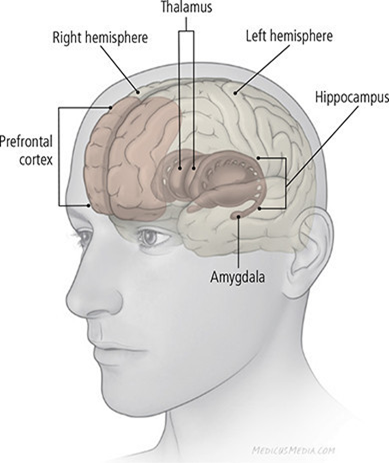
Areas of the brain involved with depression:


What causes depression?


There are a number of things that cause depression, it can happen as a reaction to something like abuse, losing your loved ones, violence in school, the death of someone close, or family problems like domestic violence or family breakdown or perhaps receiving depression after a long period of stress. Sometimes we may not know why it happens.


Depression usually develops because of a combination of life events, personal factors, and changes in the brain. It doesn’t usually develop because of one issue or event. Some people may be more at risk of depression because of their personality. Risk factors include:

- Tendency to worry a lot

- Lower self-esteem

- Perfectionism

- Sensitivity to personal criticism

- Self-criticism and negativity


There are many possible causes of depression, including faulty mood regulation by the brain, genetic vulnerability, and stressful life events. chemicals are involved in this process, but it is not a simple matter of one chemical being too low and another too high. Instead, many chemicals are involved, working inside and outside nerve cells. Millions, even billions, of chemical reactions make up the dynamic system responsible for your mood, perceptions, and how you experience life.


Even if you have depression, it's so normal you can find ways to take control of your life and manage your treatment even beyond medications. Making some lifestyle changes can boost your mood and help alleviate many of your symptoms, including low self-esteem.


But whenever you feel like you are depressed, or even sad, you can ask for help whenever you want, not because you are weak but because you want to remain strong and remember it's okay not to be ok It's okay if you feel depressed sometimes but don’t make it last


By: N.G.S


More...

Jul 6th - 2 Min Read

The Mental Health of Children is Connected to Their Parent’s Mental Health

Good parenting is a process whereby a parent meets a child's needs according to the cultural standard that changes from one generation to another and also is the process of supporting and promoting a child's physical, emotional, and mental, Quality of instructions, animation, cognitive stimulation, physical care, parent-child synchrony, sensitivity, and positive responsiveness are dimensions of parenting and are interrelated with the child's cognitive development.


Parents with good mental health means children with a good future, parents are role models (influencers) for their kids, parent’s actions and speech are essential, they can completely make a change by teaching and talking to them how to control their behavior, how to spread the love around, how to train their self to a be more excellent people and the last but not least is self-responsibility, Include your child in family discussions, talk openly and give them input into family decisions, rules, and expectations, always Keep a positive attitude think, act and speak in an optimistic way that would make them a runner whenever they do something bad or a mistake they would run to you immediately because they know instead of punishing them you would guide them.


Children’s Mental health is an essential part of children’s overall he. It has a complex interactive relationship with their physical health and their ability to succeed in school, at work, and in society. Both physical and mental health affects how we think, feel, and act on the inside and outside. Mental health is important throughout childhood from parental considerations through transitions to adulthood.


Children are most physically and mentally vulnerable from the ages of newborn to 5, which is a fragile period for brain development. Adolescence is the next big chapter of a child’s life. Because brain development is rapid and ever-changing during these two critical points, children are most vulnerable to the impact of parental mental illness.


Fortunately, there are ways that parents can support their child’s mental health:


- Explaining to children that the parent’s mental illness is not their fault 

- Receiving help and support from family members

- A stable home environment 

- Psychotherapy for the child and the parent(s)

- Receiving love and attention from the parent 

- Positive self-esteem 

- Inner strength and good coping skills in the child

- A strong relationship with a healthy adult

- Friendships and positive peer relationships

- Interest in and success at school

- Healthy interests outside the home for the child 

- Help from outside the family to improve the family environment (such as parenting classes or individual therapy)

- All children have the right to be happy and healthy and deserve access to effective care to prevent or treat any mental health problems that they may develop


We all should take care of them, not only the parents.


By: N.G.S

More...