The MET Journal

Research Reports

Profiles

Issues Unraveled

Critical Analysis

Observer

Feb 15th - 1 Min Read

The Jewish ‘Republic’ of Sindori: Small Village in Kurdistan Bearing a Long Jewish Legacy

By: Birhat Atrushi

Just like how the city of Duhok is squashed between two mountains, so is the forested village of Sindori. A typical eye may dismiss the lavish green area, which is northeast of the city of Duhok, as a haven that is just beautiful, for historians, it is not only the strategic boundaries of how the area looks, with its hills, pine trees, and roads, but also a long presence of a small Jewish minority.


The Jewish people are semities native to the Middle East. Their presence in countries like Syria, Iraq, Kurdistan comes with no shock. Over many centuries, Jewish villages and settlements have been recorded throughout the land.


Prior to Jewish presence in the area, the village was anciently described as Christian until their desertion of the area. Jewish inhabitants rose and by the 19th century, it was described as a majority Jewish village with small Kurdish numbers.


Jews worked the land, from agriculture to being skilled aristain, the area became known as an extensive town. Travelers wandering between Amedye and Mosul recall the booming business of Sinduri with its unusually big Jewish population.


Political and social changes due to war and movements left a permanent mark on the locals there. The rise of Zionism and the subsequent conflict between Jews and Arabs polarized Sinduri inhabitants and made it difficult for assimilation to occur. Constant threat by Nazi-aligned Iraqi factions during World War Two, initiation of Pogroms (violent riot with means of expelling or killing certain groups in a city) in Iraq forced many Jews to look elsewhere. In 1950, many went to Israel through Baghdad for fear of persecution after the passing of laws that would not protect Jewish lives and property.


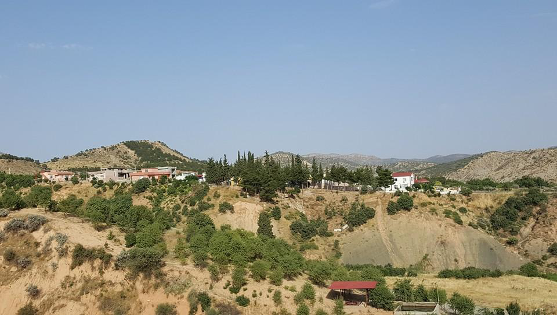
Image ofmodern day Sindori


Feb 14th - 2 Min Read

Aid Discrimination against Kurds in the Aftermath of the Earthquake

By: SeyedehZhina

Up to 5 millions are displaced & almost 1 million people are in urgent need of humanitarian aid in the aftermath of last week’s earthquake hitting Turkey & Syria due to the shifting pressure of Arabian Peninsula on the Anatolian plateau. The natural disaster has not been the only reason for such catastrophe, insufficient aid management and discrimination in distribution is another reason for people’s suffering. According to the records, the Kurdish populated areas have not been provided with humanitarian aid & rescue teams & private organizations are less present  in the Kurdish populated regions.


Abandonment by the central authorities and lack of adequate resources for disaster response can have serious consequences for affected communities. Local residents and organizations try to help and give support to the people. However, without proper training, equipment, and support, these efforts may not be enough to address the full extent of the disaster and its aftermath. In addition, the occurring crises have caused damage to several historical and cultural sites, including Diyarbakir Fortress, a recognized World Heritage site, and the nearby Hevsel Gardens. Cultural heritage damage is a cause for concern, as it not only represents the loss of human history but also affects the local economy through cultural tourism. International organizations, such as UNESCO, seek  to protect and preserve cultural heritage, but it can be difficult in areas where the central government enforces discriminatory policies.


Another point  that needs to be stressed on is the poor construction of some buildings in Turkey and Syria, which is a product of institutional corruption . As an example, during President Erdogan's tenure, Turkey experienced a significant construction boom, which had a significant impact on the country's economy. Nevertheless, this boom was often criticized for being characterized by the  lack of competitive tenders and proper regulatory oversight, which led to allegations of corruption and cronyism. Many infrastructure projects were given to a  small group of close associates from the construction sector without strict supervision, and this resulted in numerous buildings being weakly constructed .


More...

Feb 13th - 2 Min Read

Attachment Theory: How It Can Affect Our Relationship

Psychology
By: Ayat Abdulhameed

Attachment theory is developmental psychology, a theory concerning the relationship between humans. The psychiatrist and psychoanalyst John Bowlby formulated this theory. This theory focuses on relationships and bonds between people, like between parent and child and between Romantic partners. Bowlby believed that the earliest bonds formed by children with their parents or caregiver have a tremendous impact throughout life. He also suggested that attachment serves to keep the infant close to the mother,  hence improving their chances of survival.


Throughout history, children who maintained proximity to an attachment figure were more likely to receive comfort and protection, and thus more likely to survive to adulthood. In short, attachment theory is that primary caregivers who are available and responsive to an infant's needs allow the child to develop a sense of security. The infant learns that the caregiver is dependable, which creates a secure base for the child to then explore the world. Based on the observation of Schaffer and Emerson there are four distinct phases of attachment:


- Pre-Attachment Stage, from birth to three months, infants don't show any particular attachment to a specific caregiver. The infant's signals, such as crying and fussing, naturally attract the attention of the caregiver and the baby's positive responses stimulate the caregiver to stay close.


- Indiscriminate Attachment, between six weeks of age to seven months, infants start to show preferences for primary and secondary caregivers. Infants develop trust that the caregiver will respond to their needs. While they still accept care from others, infants start differentiating between familiar and unfamiliar people, responding more positively to the primary caregiver.


- Discriminate Attachment, at this point, from about seven to eleven months, infants show a strong attachment and preference for one specific person. They will protest when separated from the primary attachment figure (separation anxiety), and begin to display anxiety around strangers (stranger anxiety).


- Multiple Attachments, after approximately nine months, children begin to form strong emotional bonds with other caregivers beyond the primary attachment figure. This often includes a second parent, older siblings, and grandparents.


Factors that influence attachment include the opportunity for attachment where children who don't have a primary caregiver, like those who were raised in orphanages, may fail to develop the sense of trust needed to form an attachment. And the second factor is quality caregiving, which is a vital factor, it is when caregivers respond quickly and consistently to the child, thus they learn that they can depend on people who are responsible for their care.


There are four patterns of attachment, including:


1- Ambivalent attachment: These children become extremely distressed when a caregiver leaves. And due to poor caregiver availability, these children cannot depend on their primary caregiver to be there when they need them.


2- Avoidant attachment: Children with an avoidant attachment tend to avoid caregivers, showing no preference between a caregiver and a stranger. This attachment style might be a result of abusive or neglectful caregivers. These children who are punished for relying on a caregiver will learn to avoid seeking help in the future.


3- Disorganized attachment: These children display a confusing mix of behavior, seeming disoriented, or confused. They may avoid or resist the parent. Lack of a clear attachment pattern is likely linked to inconsistent caregiver behavior. In such cases, parents may serve as both a source of comfort and fear, leading to disorganized behavior.


4- Secure attachment: Children who can depend on their caregivers show distress when separated and joy when reunited. Although the child may be upset, they feel assured that the caregiver will return. When frightened, securely attached children are comfortable seeking reassurance from caregivers. This is the most common attachment style.


Children who are securely attached as infants tend to develop stronger self-esteem and better self-reliance as they grow older. These children also tend to be more independent, perform better in school, have successful social relationships, and experience less depression and anxiety. Although attachment styles portrayed in adulthood aren't necessarily the same as those seen in infancy, early attachments can have a serious impact on later relationships. Adults who were securely attached in childhood tend to have good self-esteem, strong romantic relationships, and the ability to self-disclose to others.


More...

Feb 10th - 1 Min Read

Earthquakes: How To Protect Yourself

Self-development
By: Ayat Abdulhameed

An earthquake is the intense shaking of the earth's surface caused by movements in the earth's outermost layer. The earth has four primary layers: a solid crust, a hot, nearly solid mantle, a liquid outer core, and a solid inner core. The solid crust and the stiff layer of the mantle that makes up the Lithosphere, which is the rigid, rocky outer layer of the Earth made up of plates called tectonic plates  are constantly shifting as they drift around on the viscous or slowly flowing. This continuous movement causes stress on earth's crust.


When the stress is too intense, it leads to cracks in the earth called faults, which the movement of the earth's crust at the fault line causes earthquakes. The causes might be natural forces where sudden energy is released by elastic strain, gravity, chemical reactions, or even the motion of massive bodies. It can also be a Tectonic earthquake explained by the elastic rebound theory.


A tectonic earthquake occurs when strains in rock masses have accumulated to a point where the resulting stresses exceed the strength of the rocks and sudden fracturing results. The cause can also be a volcanic earthquake caused by a slip on a fault near a volcano. Another cause is Artificial induction provoked by human activities, such as the injection of fluids into deep wells, the donation of large underground nuclear explosions, the excavation of mines, and the filling of large reservoirs and deep mining. Earthquakes have varied effects, including transformations in geologic features, damage to manufactured structures like buildings, and a negative impact on human and animal life.


Most of these effects occur on solid ground, but since most earthquake principles are located under the ocean bottom, severe effects often follow along the margins of oceans. The energy from an earthquake travels through Earth in vibrations called seismic waves. Scientists can measure these waves on seismometers. A seismometer detects seismic waves below the instrument and records them as zig-zags. Scientists can determine an earthquake's time, location, and intensity from the information recorded by a seismometer.


This record also provides information about the rocks the seismic waves traveled through. Seismic magnitude scales are used to describe the overall strength of an earthquake. These are differentiated from seismic intensity scales that categorize the intensity or severity of ground shaking caused by an earthquake at a specific location. Magnitudes are usually determined from measurements of an earthquake's seismic waves as recorded on a seismogram.


Magnitude scales range on what aspect of the seismic waves are measured and how they are measured. If the magnitude is 2.5 or less, usually the earthquake effects cant be felt. If it is 2.5 to 5.4, the earthquake is often felt and only causes minor damage. But if it was 5.5 to 6.0, slight damage to buildings and structures is done, and 6.1  to 6.9 can cause a lot of damage in intensely populated areas, but 7.0 to 7.9 can cause severe damage, and 8.0 or greater can destroy communities near the epicenter. Knowing what to do and how to protect ourselves during earthquakes is imperative. One way to immediately protect yourself is by DCH:


- DROP down onto your hands and knees before the earthquake knocks you down. This will protect you from falling and help you move if necessary.

- COVER your head and neck underneath a sturdy table or desk, and if there is no cover nearby, get down near an interior wall or low-lying furniture that won't fall on you and cover your head and neck with your arms. If possible, your entire body.

-  HOLD on to your cover or your head and neck until the shaking stops. Be prepared to move with your body if the shaking shifts around.


If you are inside a low-rise building, stay inside and do not run outside or change your location during the earthquake, and to reduce your chances of being hurt, you can take the following actions:


I- f possible, within the few seconds before the shaking intensifies, quickly move away from glass, hanging objects, or other large furniture that could fall and watch for falling objects.

- If available nearby, grab something to shield your head and face from falling debris and broken glass.

- If you are in the kitchen, quickly turn off the stove and take cover at the first sign of shaking.

- If you are in bed, hold on and stay there, protecting your head with a pillow. You are less likely to be injured staying where you are.


If you are in a high-rise building, follow the drop, cover, and hold on.


- Move away from windows and outside walls.

- Stay in the building.DO NOT use the elevators.

- The electricity may go out, and the sprinkler systems may come on.

- If you are trapped, stay calm. Try to get someone’s attention by tapping on hard or metal parts of the structure.


If you are outside, make sure to move away from buildings and utility wires. Go to an open area away from trees or any falling objects. And If you are in a moving vehicle, stop as quickly and safely as possible in a place away from buildings, trees, or any falling objects.


More...

Feb 8th - 1 Min Read

Apple’s Revenue Declines

Economy
By: Hozan Qaraman

Apple released its first-quarter earnings report on Thursday which reveals a drop in the firm’s sales by more than 4%. The quarterly revenue in 2023 is $117.2bn while it is the greatest decline in the last seven years.  


Tim Cook, Apple’s CEO, blames the pandemic for their decline in sales, especially the situation in China where the firm’s production is based. Also the Russia-Ukraine war impacted the latest Apple records. Roger McNammee, founding partner of Elevation Partners, made a remark on BBC that “Apple’s biggest concern was its supply chain in China as the Asian country has dealt with Western economies more aggressively.”  


As Apple’s profits dropped by 13% to $30bn, iPhone sales had a decline to 8% and Mac’s sales fell by 29%. However,  Apple has now 2 billion active devices across the globe and their productions stay as one of the most wanted.  


Nevertheless, other tech firms have been struggling with recording drops in their sales since the pandemic, but they put their ultimate efforts to recover and make profit again. Recently, Amazon revealed a 2% drop in its online sales whereas the net sales is  9% up compared to 2021.     


More...

Feb 5th - 1 Min Read

Origin of Popular Video Game Believed to be From a 12th Century Secret Society in Iran

Culture
By: Birhat Atrushi

Assassin’s Creed regards itself in high standards as an open-world stealth game that represents a secret society which is decentralized, anarchist and fights for freedom. Deployed against its counterpart, the templar order, an authoritarian society, players control various Assassins in different situations fighting for their rights.


From the ptolemaic period in Assassin’s Creed Origins, to 19th century industrial Britain in Syndicate, a vast network of people, events, and locations are covered.


Many believe that the source of inspiration for this gigantic franchise came from a highly secret and militarized sect/order in the 12th century known as Al-Hassasin.


The order of Assassins - other than influencing the English term as well - were a Shia Islamic religious and political order established by Hassan Sabaha who after capturing the castle, formed a state-like order that controlled much of the mountainous region in the area with the intention of halting and assassinating enemies of the Ismaili Shia state of Nizari.


With over 50 assassinations, the order proved critical against various sunni Islamic and Christian forces in the region, including the Seljuk empire that rapidly controlled the Middle East.


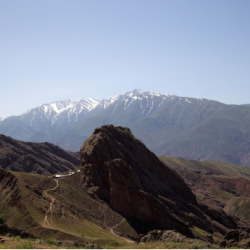
Location of the Alamut Castle in Iran. meaning “Eagle’s nest” from Persian.


Location of the Alamut Castle in Iran. meaning “Eagle’s nest” from Persian.


More...