

The MET Journal

Research Reports

Profiles

Issues Unraveled

Critical Analysis

Observer

Mar 1st - 1 Min Read

The Problem of Eating Disorders in the Middle East

Mental health has always been a taboo subject in the Middle East mostly because if you suffer from any mental illness you are automatically considered an unfit member of society and in some extreme cases shunned by those around you. That is why so many young people would rather endure their mental problems in silence instead of getting the help they need. Many of today’s youngsters suffer from eating disorders, which is considered a mental illness.


So what is an eating disorder? An eating disorder is a condition related to tenacious eating habits that negatively impacts your health and if left untreated could create long-term effects which are especially dangerous in the Middle East when taking into account the disregard for mental health and misinformation among the youth.


One common misconception is that only a thin or underweight person can suffer from an eating disorder but the truth goes much deeper. Studies show that the most common eating disorder is binge eating disorder- B.E.D, in which the patient eats large amounts of food in a short period of time and feels immense shame and guilt afterward. It is sometimes unrecognizable which explains why many people are left undiagnosed and untreated.


It is not to be mistaken with bulimia nervosa in which the patient binge eats usually in secret and then purges to get rid of the extra calories. The damage from this eating disorder can be long-lasting even after recovery the body can still suffer from long-term effects such as heart damage, tooth decay, and other serious issues.


Another common eating disorder is anorexia nervosa, an eating disorder characterized by an extremely low intake of calories. Anorexia has its own share of side effects, hair loss and constipation being the least extreme.


Nonetheless, all eating disorders have one thing in common, they are generated from our minds. It's generally fed to young people that they need to change their appearance to fit certain beauty standards which are impossible to achieve most of the time.


However, it doesn’t mean all hope is lost. Fortunately, all eating disorders are treatable and there are many helpful methods to help overcome them. If you or someone you know might be suffering from an eating disorder it is important to understand the warning signs of an eating disorder and reach out for help.


By: Nora Idris


Feb 27th - 2 Min Read

Bipolar Disorder: The Silent Killer

Self-development
By: Ayat Abdulhameed

Bipolar disorder can affect relationships, education, work, and more. According to Our World in Data, 46 million worldwide are diagnosed with Bipolar disorder. This is aside from the many undiagnosed people because of  lack of awareness, which makes them feel like their mixed behavior is their fault or their whole identity; meanwhile, it is a medical condition that can be controlled.


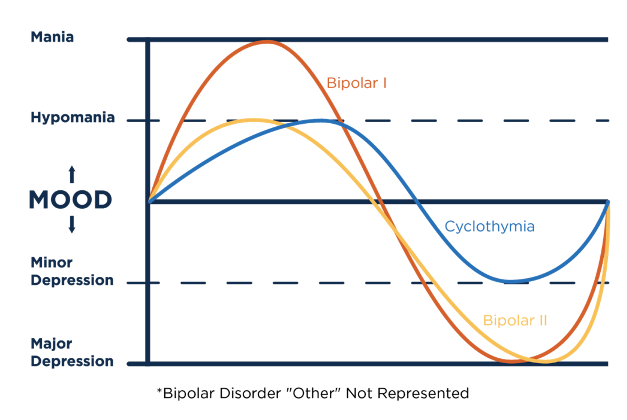
Bipolar Disorder is a mental illness causing unusual shifts in mood, ranging from extreme highs Mania to extreme lows Depression. Someone with Bipolar disorder may experience changes in their energy, thinking, behavior, and sleep. This makes it difficult for the individual to carry out daily tasks, work, attend school, and maintain a healthy relationship.


Depressive episodes include losing interest or pleasure in most activities and feeling sad and hopeless. In contrast, the Mania episode includes feeling euphoria and being full of energy, and being overly excited about something. Less severe manic periods are known as hypomanic episodes.


There are three types of bipolar disorder. Each involves clear changes in mood, energy, and activity level:


- Bipolar I disorder is a maniac episode that lasts seven days, and the person experiences severe manic symptoms sometimes. Usually, depressive episodes occur as well, typically lasting at least two weeks. In some cases, Mania may trigger a break from reality called (Psychosis).


- Bipolar II disorder is a pattern of depressive episodes and hypomanic episodes.


Cyclothymic disorder is defined by very mild hypomanic and depressive episodes that are triggered by a particular drug, alcohol, or medical condition, such as Cushing’s disease or multiple sclerosis, or stroke.


Signs and symptoms of bipolar I and bipolar II disorders may include other features, such as anxious distress, melancholy, psychosis, or others. The timing of symptoms may include diagnostic labels such as mixed or rapid cycling. In addition, bipolar symptoms may occur during pregnancy or change with the seasons.


Symptoms of bipolar disorder can be challenging to identify in children and teens. It's often hard to tell whether these are normal ups and downs, the results of stress or trauma, or signs of a mental health problem other than bipolar disorder. The pattern can vary from that of adults with bipolar disorder. And moods can rapidly shift during episodes. Some children may have periods without mood symptoms between episodes. Bipolar disorder is a lifelong illness. Episodes of mania and depression typically come back over time. Between episodes, many people with bipolar disorder are free of mood changes, but some people may have lingering symptoms. Long-term, continuous treatment can help people manage these symptoms, including those with the most severe forms of bipolar disorder.


An effective treatment plan usually includes a combination of medication and psychotherapy, also called talk therapy. Remember that bipolar disorder is a medical condition and not your fault or your identity. It can be controlled through treatment, acceptance, and understanding of loved ones and empowering yourself to find balance in your life.


More...

Feb 23rd - 1 Min Read

A Strike on Iranian Installations in Syria

Last Sunday, February 19th, Israel’s attacks targeting Iranian arsenal continued when a building in central Damascus's Kafr Sousa neighborhood was hit by an Israeli rocket strike. The area is close to a heavily guarded security complex and Iranian installations. The attack killed five people and injured fifteen, according to Syrian state media, and the Iranian media reported the same number of casualties.


The densely populated area close to Umayyad square was damaged by the targeted strike, and several buildings were damaged.While Israel’s military spokesman did not accept to answer questions in this regard, Iran's Foreign Ministry condemned it- comparing it to the recent attacks by ISIS in Syria. Israel has carried out airstrikes against suspected Iranian-sponsored weapon transfers and personnel deployments in Syria since 2017. According to Western intelligence sources, Iran has been expanding its military presence in Syria with thousands of militias and local paramilitary groups under its command.


Syrian army released a statement confirming that the rocket strike in Damascus caused damage to several civilian homes and neighborhoods in the vicinity. The highlighted aspect of this event was stressed  by the Syrian Foreign Minister, Faisal Mekdad, who condemned the attack, describing it as a "crime against humanity." He argued that the timing of the attack, less than two weeks after the country was hit by a devastating earthquake that claimed the lives of more than 5,800 people, was particularly egregious.


By: S.R

More...

Feb 23rd - 1 Min Read

Kurdish Play Experiencing Positive Reviews in Duhok

Culture
By: Birhat Atrushi

Drama has made its footprint on most of the societies of the world. Like ancient Greece, a stadium surrounded by chairs has become a central expansive location for the expression of thoughts. Given that it portrays human emotions and aesthetic values, the theater goes beyond some constructive lines such as academia and science for education.


Art has that global sensation. It gives the most impressive space for any human, be it mental or physical, to unleash a fully independent thought and idea.


Thus, the city of Duhok experienced that when Duhokis eagerly visited Mohammed Arif Ciziri’s hall for the premier of one of the most anticipated Plays in the area: Kulav U Peyk.


Recalling the particular event, it opened the door for a theatrical exhibition in Duhok which has been increasing in attention for a while now. It was composed of various artists and peoples, graduates and students of drama in the local University of Duhok, and most importantly, had an audience from all across the spectrum of any labeling in the area. From actors to politicians, to activists and professors, an ideal environment was created for the play.


More...

Feb 19th - 1 Min Read

Critical Thinking’s Way to Success

By: Ayat Abdulhameed

Critical thinking is questioning, analyzing, evaluating, and judging what we do and perceive from reading, hearing, or seeing. It is making a reliable judgment based on reliable information. In psychology, self-criticism is typically studied and discussed as a negative personality trait, however critical thinking is to clarify our thinking so that we can break down a problem or a piece of information, analyze it, and use that understanding to reach an informed decision or judgment.


Critical thinking is that mode of thinking - about any subject, content, or problem - in which the thinker improves the quality of their thinking by skillfully taking charge of the structures inherent in thinking and imposing intellectual standards upon them.


The quality of our life and what we produce, make, or build depends precisely on the quality of our thoughts. Shoddy thinking can cost our time, and money and leave a long-term effect on our life, but excellence that’s taught with constructive critical thinking must be systematically cultivated. Well-cultivated critical thinking requires raising vital questions and problems and formulating them clearly and precisely.


Critical thinking also requires gathering relevant information and using abstract ideas to decode it effectively resulting in well-reasoned conclusions and solutions, thinking open mindedly within the alternative system of thought, assessing their assumptions, implications, and practical consequences.


Critical thinking is, in short, self-directed, self-disciplined, self-monitored, and self-corrective thinking. It presupposes the approval of strict standards, excellence, and mindful command of their use. It entails effective communication and problem-solving abilities and a commitment to overcome our native egocentrism and sociocentrism. In an academic context, critical thinking is most commonly associated with arguments whether it is to understand an idea within yourself or others, learning these can help develop critical thinking:


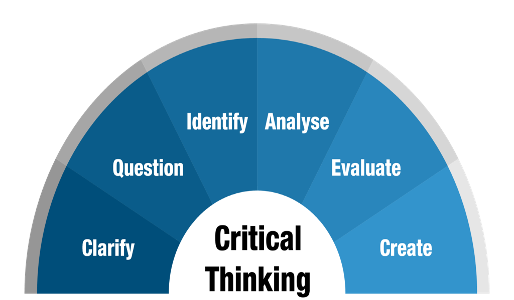
1- Clarify: clarifying the purpose of the thought and context.

2- Question: questioning the source of the thought or information.

3- Identify: Identify the argument or the thought.

4- Analyse: analyze the source of the argument or the thought  

5- Evaluate: evaluate the thought and arguments of others

6- Create: synthesize your own argument and thoughts.


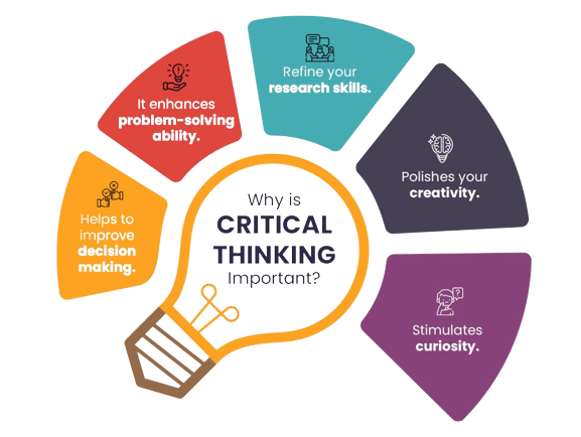
Critical thinking is vital in any aspect of life, whether in the early stage of life when a child decides whether to eat a fruit or not or a teenager choosing their friend group or their college major, critical thinking helps to make the best decision, the benefit of critical thinking includes:


- Improving decision-making

- Enhancing problem-solving ability

- Refining research skills Polishing creativity.

- Stimulating curiosity.


More...

Feb 17th - 1 Min Read

Cost of Turkey’s Deadliest Earthquake

By: Hozan Qaraman

Turkey experienced the most devastating earthquake,7.8 magnitude, in its last 100 years history, and it caused many injuries and nearly 50.000 people, and demolition of thousands of buildings, and houses. The earthquake hit 10 provinces in Turkey – 13.4 million people lived there that produce 10% of the state.


According to the Turkish Enterprise and Business Confederation,the cost of destruction is more than $84.1 billion ,$70.8 billion goes  for repairing homes, $10.4 billion for the waste of national revenue and $2.9 billion for skipping  working days.


President Tayyip Erdogan of Turkey states that the government is planning  a complete reconstruction program that would make the country stand on its feet again in a year. IMF Executive Director Mahmoud Mohieldin said the rebuilding process, which is funded by the public and private  investments will result in Turkey’s GDP growth.


However, it is  anticipated that the earthquake will result in a cut of 2% economic growth in Turkey that was predicted to end up with 5.5% growth prior to the earth tremor.


The Turkish government came up with a three-month state of emergency in the 10 provinces hit by the earthquake while local and international aid reach there and operations of discovering victims under the rubble continue.


More...